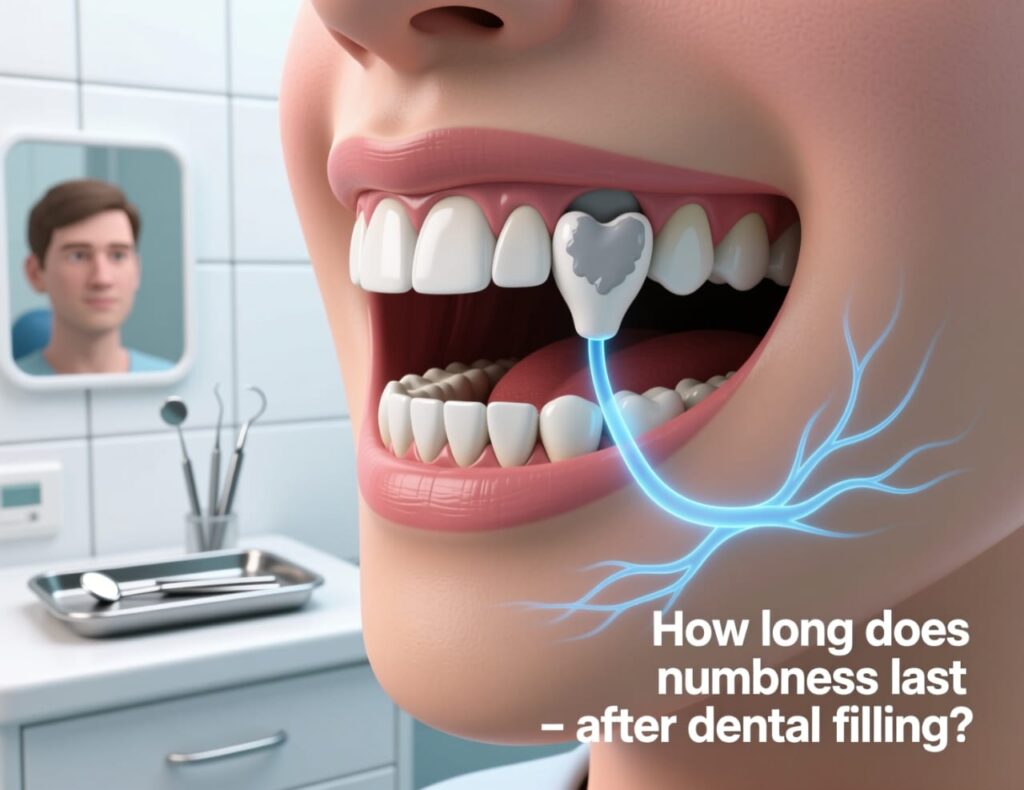
Many people worry about how long numbness lasts after a dental filling, especially when the strange feeling stays longer than expected. Understanding this helps reduce fear and confusion after treatment. Dental numbness happens because anesthesia blocks the nerves that send pain signals, and everyone’s body reacts differently. Some people feel normal in a short time, while others need longer for the sensation to fade. This guide explains the process in simple words and helps you know what is normal. It also describes what to expect, why numbness stays, and when to ask your dentist for help. This makes recovering after a filling easier and calmer for every patient
What Causes Numbness After Dental Filling
Many people think the numb feeling after a filling comes from the filling itself. This is not true. The numbness comes from the local anesthesia that the dentist uses. The anesthesia blocks pain signals. This makes your tooth and nearby areas feel numb. It also helps people stay calm and feel safe during treatment.
The dentist injects anesthesia near the nerve that serves the tooth. When the nerve cannot send pain signals, the dentist can clean the decay and place the filling without discomfort. This is why modern dental care feels almost painless for most people. The numb feeling can affect the lips, the tongue, the cheek, and sometimes the face. This depends on the amount of anesthesia and the tooth that was treated.
Your nerves return to normal once the anesthesia wears off. But this process takes time. The time varies in every person. Age, health, metabolism, the type of anesthetic, and the depth of the injection all affect how long the numbness stays. Patients often notice that their mouth feels strange during this time. They may feel like their lip is swollen, or their tongue is large. These feelings are normal, even though they can be annoying.
How Long Numbness Lasts After Dental Filling
The question how long does numbness last after dental filling does not have one exact answer. In most people, the numbness lasts between one hour and four hours. Some feel normal sooner. Some feel numb much longer. The type of anesthetic and the area of the mouth make a big difference.
When a dentist works on the upper teeth, the numbness tends to fade faster. This is because the bone in the upper jaw is softer. The anesthetic spreads faster and also wears off faster. Most upper fillings stop feeling numb in one to two hours.
Lower teeth, especially lower molars, take much longer. The dentist usually gives a mandibular nerve block. This block affects a large nerve that connects to the lip, chin, cheek, gums, and teeth. The numbness from a nerve block may last three to five hours. In some people, it lasts even longer.
People with slow metabolism or people who received long-acting anesthetic can stay numb for many hours. For example, some anesthetics used for complex cases can last six to twelve hours. This is less common for simple fillings, but it can happen.
Here is a helpful table:
| Tooth Area | Usual Numb Time | Why It Lasts This Long |
| Upper front or upper premolar | One to two hours | Softer bone and shallow injection |
| Upper molar | Two to three hours | More anesthetic may be used |
| Lower premolar | Two to three hours | Stronger bone and deeper nerves |
| Lower molar (nerve block) | Three to five hours | Large nerve block affects big area |
| Deep or multiple fillings | Up to six hours | More injections used |
| Long-acting anesthetic | Six to twelve hours | Slow-release formula |
These times are normal and safe. Dentists use these methods every day.
Types of Dental Anesthetics
Many people do not know that there are different types of anesthetics. Each one has a different effect on the body. Knowing them helps patients understand why numbness lasts longer sometimes.
Lidocaine is the most common anesthetic. It starts working fast and lasts two to three hours. Dentists use it for simple fillings. Articaine works very fast and lasts a little longer. It is often used for lower molars because it penetrates bone well. Mepivacaine has a shorter life and is sometimes used without adrenaline for people who cannot have epinephrine. Bupivacaine is very strong and lasts much longer. Dentists use it more for surgeries, but sometimes for difficult fillings.
This next table explains the anesthetics:
| Anesthetic | Start Time | Duration | Common Use |
| Lidocaine | Two to three minutes | Two to three hours | Standard fillings |
| Articaine | One to two minutes | Two to four hours | Lower molars or deep fillings |
| Mepivacaine | Fast | One to two hours | People sensitive to epinephrine |
| Bupivacaine | Slow | Six to twelve hours | Surgeries, long procedures |
Upper vs Lower Teeth Numbness
The lower jaw has thick bone. Nerves in the lower jaw are deeper and larger. This is why dentists use nerve blocks. A nerve block affects a big area. It makes the lip, tongue, and cheek feel numb. It also takes longer to leave the system.
Upper teeth have smaller nerves. The dentist injects anesthesia around the tooth. Because the upper jaw bone is porous, anesthesia spreads and wears off quickly. Patients usually prefer the numbness from upper anesthesia because it fades fast.
When Numbness Lasts Longer Than Expected
Many patients worry when numbness lasts longer than expected. They may think something is wrong. But long numbness does not always mean a problem. Sometimes the tissue absorbs anesthesia slowly. Sometimes a dentist gives extra anesthesia for comfort. Sometimes the patient’s body needs more time to break down the medicine.
However, numbness that stays more than eight hours may need attention. In most cases, it is still harmless, but it is wise to tell the dentist. Lingering numbness may come from swelling around the nerve. It may also come from irritation near the injection site. This irritation is usually temporary.
Some people experience temporary tingling as the feeling returns. The tingling means the nerve is waking up. It often feels like pins and needles or light buzzing.
How to Help the Numbness Wear Off Faster
Many people want to speed up the process because numbness feels unpleasant. While you cannot remove anesthetic instantly, you can help your body metabolize it faster. Warm compresses after an hour improve blood flow. Moving your mouth gently also helps. Light exercise boosts circulation. Drinking water supports your metabolism.
Patients should avoid biting their cheek or lips. They should also avoid hot drinks because numb tissues can burn easily.
Here is a small table showing safe and unsafe actions:
| Action | Safe or Not | Reason |
| Warm compress after one hour | Safe | Improves circulation |
| Chewing hard food | Not safe | Can injure numb tissue |
| Drinking water | Safe | Supports metabolism |
| Drinking hot coffee | Not safe | Risk of burns |
| Talking and gentle movement | Safe | Wakes up facial muscles |
Complications That May Cause Longer Numbness
Complications are rare, but extended numbness can happen. Sometimes the needle touches a nerve. This does not cause permanent harm, but it may irritate the nerve. The nerve needs time to heal, and feeling returns slowly. Sometimes a small bruise inside the cheek presses on the nerve. Sometimes inflammation from deep decay affects the area.
Nerve issues after a filling are extremely rare. Most cases resolve in days or weeks. Good dental care and good follow-up help detect problems early. Dentists look for signs of swelling, infection, or unusual pain. These are not common after simple fillings.
Numbness vs Tingling Sensation
People often confuse numbness with tingling. Numbness means the area has no feeling. Tingling means the nerve is turning on again. Tingling can feel strange but is a good sign. It means the anesthesia is wearing off. If tingling lasts for many days, then the dentist should check the area to ensure the nerve is healing.
Numbness After Different Types of Fillings
Composite fillings, which are tooth-colored, use the same anesthetic as other fillings. The numbness comes from the injection, not the material. Amalgam fillings also need anesthesia, and the numbness time is almost the same. Deep fillings near the nerve may need more anesthesia. This can extend numbness. Multiple fillings done in one visit may also require more injections.
Case Studies About Dental Numbness
Case Study One: A young woman receives a filling on an upper premolar. She feels numb for two hours. She drinks cold water but waits to eat. The numbness fades quickly because upper anesthetics wear off fast.
Case Study Two: A man has a deep filling on a lower molar. He receives a nerve block. His tongue and lip feel heavy for almost five hours. He walks, drinks water, and the feeling slowly returns. This is normal for nerve blocks.
Case Study Three: A patient receives three fillings on one side. The dentist uses several injections. The patient stays numb for six hours. The dentist explains that the amount of anesthetic affects the time.
Case Study Four: A person with slow metabolism remains numb for eight hours. They contact the dentist. The dentist confirms that the anesthetic used was long lasting. The feeling returns fully the next morning.
Frequently Asked Questions
Many people ask why their tongue feels big. The answer is that the nerve that controls sensation in the tongue becomes numb, so your brain thinks the tongue is larger. People also ask if it is okay to eat while numb. It is better to wait or chew on the side that is not numb.
Another common question is whether numbness can be reversed. Some dental clinics have reversal drugs, but they are not used in most cases. Dentists use them only when needed.
People also ask if long numbness means nerve damage. This is usually not true. Nerve irritation is possible but temporary. Permanent nerve damage from a dental filling is extremely rare.
When to Call Your Dentist
You should call your dentist if numbness lasts longer than twenty-four hours. You should also call if you have swelling, fever, strong pain, or trouble speaking. These signs may show infection or another issue. Dentists can check the area and give advice. They can also help calm your worries if the numbness is normal.
Expert Tips to Manage Numbness After a Dental Filling
After a dental filling, many people notice that their lip, tongue, or cheek feels numb. This is completely normal and happens because dentists use local anesthesia to block pain during the procedure. While numbness is temporary, it can feel strange, heavy, or even awkward. Managing this period properly is important to prevent injuries and make your recovery smooth. In this guide, we’ll share expert tips, practical advice, and examples to help you handle numbness safely and comfortably.
Understanding Numbness After a Dental Filling
When a dentist performs a filling, they inject anesthetic near the nerve supplying the tooth. The medication temporarily blocks nerve signals so you won’t feel pain during the procedure. This leads to numbness in areas like your lips, tongue, or cheeks. The numb sensation usually starts within minutes and can last 1–3 hours, though some people may experience it up to 5 hours, depending on factors like the type of anesthetic, dosage, location of the filling, and individual metabolism.
Knowing why numbness occurs helps reduce anxiety. Patients often worry when their lips or tongue feel heavy. This sensation is normal and temporary. In most cases, the anesthetic naturally wears off without complications.
Tip 1: Avoid Chewing or Biting
One of the most important tips is to avoid chewing or biting while numb. Accidental bites can cause cuts, pain, and swelling. This is especially true for children and older adults, who may not be aware of the numbness. Soft foods like yogurt, oatmeal, soup, or mashed potatoes are safest during this period.
Even seemingly harmless foods such as bread or crackers can lead to accidental biting if your mouth is numb. Waiting until sensation returns fully is the simplest way to prevent injuries.
Tip 2: Be Careful with Temperature
During numbness, your mouth may not sense hot or cold accurately. Drinking hot beverages or eating hot food can burn your lips, cheeks, or tongue. Cold foods, like smoothies or ice cream, are generally safer and may even soothe mild discomfort around the treated tooth.
A helpful practice is to test the temperature of food or drinks before consuming them. If it feels too hot or too cold in a normal area of your mouth, wait or adjust the temperature. Dental experts recommend avoiding any extreme temperatures until full sensation returns.
Tip 3: Gentle Jaw and Tongue Movements
Gently moving your jaw and tongue encourages blood circulation, which helps the anesthetic wear off faster. Slowly talking, moving your tongue, or lightly opening and closing your mouth are safe ways to speed recovery.
Avoid aggressive chewing or stretching, as this can cause accidental injury. Think of gentle movement as a “wake-up exercise” for your mouth. This tip is especially helpful for patients who experience prolonged numbness in the lower jaw, which often lasts longer than the upper jaw.
Tip 4: Use a Warm Compress
Applying a warm compress on the cheek can make numbness more comfortable. The warmth increases blood flow to the area, helping the anesthetic metabolize. Use a warm, not hot, cloth or heat pack for 5–10 minutes. Repeat as needed, but never apply heat directly inside your mouth.
A warm compress also helps reduce any mild swelling or soreness that may appear after the procedure. Many dentists recommend using a compress intermittently throughout the first few hours after your filling.
Tip 5: Stay Hydrated
Drinking water helps your body process anesthesia efficiently. Hydration also prevents headaches or dizziness, which sometimes occur after dental procedures. Avoid caffeine or alcohol during the numb period, as these can reduce circulation and potentially slow recovery.
Simple hydration, combined with gentle mouth movements, can shorten the numb period and make recovery more comfortable.
Tip 6: Supervise Children and Older Adults
Children and elderly people are more likely to accidentally bite themselves during numbness. Close supervision is essential. For children, explain that their lips or tongue are “asleep” and must be handled gently. Offer soft foods like applesauce, mashed bananas, or yogurt.
Older adults may have reduced oral sensation or slower reaction times. Ensuring they have soft foods and careful supervision minimizes the risk of accidental injuries.
Tip 7: Manage Mild Discomfort After Numbness
Once the anesthetic wears off, mild soreness or sensitivity around the treated tooth may occur. Over-the-counter pain relievers like acetaminophen or ibuprofen are usually safe, but always follow your dentist’s instructions.
Warm saltwater rinses can also help reduce inflammation and soothe the area. Avoid sticky, hard, or chewy foods for a few hours to prevent irritation or dislodging the filling.
Tip 8: Watch for Unusual Symptoms

While numbness is normal, certain signs may indicate a problem. Contact your dentist if numbness lasts longer than 6 hours, or if you notice swelling, facial drooping, severe pain, or unusual tingling. These symptoms are rare but may indicate nerve irritation or a reaction to anesthesia.
Early recognition of abnormal symptoms ensures safe recovery and prevents complications. Most patients, however, regain full sensation without any issues.
Tip 9: Relax and Reduce Stress
Stress can make numbness feel longer or more uncomfortable. Taking time to relax supports your body in processing anesthesia naturally. Deep breathing, listening to music, or light neck and shoulder stretches can help you feel more comfortable during the numb period.
A calm environment also helps children or older adults stay relaxed, reducing the chance of accidental biting or anxiety.
Tip 10: Plan Meals and Prepare Soft Foods
Since you cannot eat normally while numb, plan your meals in advance. Have soft foods like yogurt, mashed potatoes, smoothies, or oatmeal ready for the hours immediately after your dental appointment.
Creating a small “numbness recovery kit” with soft foods, water, and utensils makes the process easier. This prevents accidental chewing of hard foods and ensures a smooth, safe recovery.
Quick Reference Table: Numbness Management Tips
| Tip | How to Apply |
| Avoid chewing | Stick to soft foods until sensation returns |
| Temperature caution | Wait for hot or very cold foods and drinks |
| Gentle movements | Move jaw and tongue lightly to stimulate blood flow |
| Warm compress | Apply externally for 5–10 minutes, not too hot |
| Stay hydrated | Drink water, avoid alcohol/caffeine |
| Supervise children/elderly | Provide soft foods and guidance |
| Manage discomfort | OTC painkillers, warm saltwater rinses |
| Watch for unusual symptoms | Call dentist if numbness >6 hours or other signs appear |
| Relax | Reduce stress to aid recovery |
| Plan meals | Prepare soft foods ahead for safety |
Case Study Example
A 38-year-old woman received two lower molar fillings using lidocaine with epinephrine. Her lips, cheeks, and tongue remained numb for about 4 hours. She avoided chewing, applied a warm compress, stayed hydrated, and gently moved her jaw. Once sensation returned, she experienced minimal soreness and had no injuries. This case demonstrates that following simple tips can prevent accidents and make recovery safe and comfortable.
By following these tips, you can manage numbness after a dental filling effectively. Protecting your lips, cheeks, and tongue, staying hydrated, moving your mouth gently, and planning meals will ensure a smooth recovery. Remember, numbness is temporary, and careful care allows you to enjoy your newly restored teeth safely.
Conclusion
Numbness after a dental filling is normal. It comes from the anesthesia, not the filling. The feeling usually fades in one to four hours. Lower fillings and nerve blocks take longer. Many factors affect how long the numbness stays. Most people recover without any problem. Understanding why numbness happens helps reduce fear. Anyone who has concerns can call their dentist for help.