
Many patients ask Why No Dairy After Dental Implant during recovery. Dairy can interfere with healing, increase bacterial growth, and affect blood clotting around the implant. Understanding oral surgery, postoperative care, implant success, nutrition, and wound management helps ensure a smooth recovery and long-lasting results for a healthy, fully integrated dental implant.
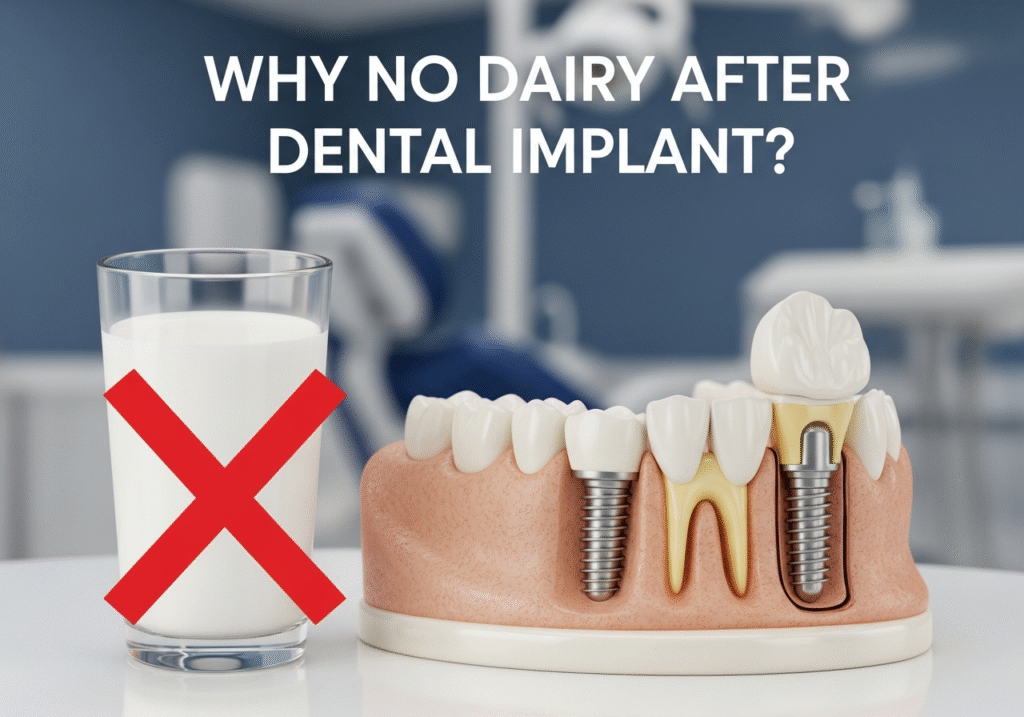
Dental implants are one of the most effective solutions for replacing missing teeth. They help restore chewing function, improve smile aesthetics, and preserve jawbone health. However, the success of a dental implant does not depend solely on the surgical procedure. Proper post-operative care is essential for healing, avoiding complications, and ensuring long-term success. One common question that arises is: why no dairy after dental implant? Understanding this is crucial, as consuming dairy at the wrong time can interfere with healing, reduce the effectiveness of medications, or increase the risk of infection.
Dairy products like milk, cheese, and yogurt are nutritious for most people. They are rich in calcium and protein, which are essential for bone health and overall nutrition. However, immediately after dental implant surgery, these foods can cause complications. Compounds in dairy may affect blood clot formation, interact with prescribed antibiotics, or introduce bacteria into the surgical site. Avoiding dairy for the initial healing period is a simple but important step to ensure smooth recovery and long-term implant success.
In this article, we will cover:
- The reasons to avoid dairy after dental implant surgery
- How dairy affects healing and recovery
- Safe and nutritious alternatives to dairy
- Recommended post-implant diet and meal ideas
- Tips to speed healing and avoid complications
- Patient experiences and FAQs
Why Avoid Dairy After Dental Implant
After dental implant surgery, your body starts a natural healing process. During this critical period, some foods can interfere with recovery, and dairy is one of them. The main reasons for avoiding dairy after dental implants are:
1. Antibiotics May Not Work Properly
Dentists often prescribe antibiotics to prevent infection after dental implant surgery. Many dairy products contain calcium, which can bind to certain antibiotics such as tetracycline or ciprofloxacin. This reduces the absorption of the medication, making it less effective. If antibiotics do not work properly, the risk of infection increases, which can compromise the implant’s success.
2. Blood Clot Formation
A blood clot forms in the surgical site immediately after implant placement. This clot is crucial because it protects the wound from bacteria and supports tissue regeneration. Dairy products can sometimes destabilize the clot or introduce bacteria that interfere with healing. A weak or dislodged clot can lead to dry socket, which is painful and delays recovery.
3. Risk of Infection
Dairy products, especially those that are unpasteurized or improperly stored, can contain bacteria. After surgery, the implant site is vulnerable, and introducing bacteria can cause infection. Avoiding dairy reduces this risk and allows the surgical site to remain clean during the first few critical days of healing.
4. Digestive Issues
Surgery and anesthesia can temporarily affect digestion. Some people may experience bloating, constipation, or gas after dental implant surgery. Dairy products, particularly milk, can worsen these symptoms. A diet that avoids dairy can make recovery more comfortable and support better overall healing.
How Dairy Affects Implant Healing
Healing after dental implant surgery depends on proper blood clot formation and tissue regeneration. Dairy products can affect this process in several ways:
- Softening or dislodging the blood clot: A clot is essential for protecting the implant site. If the clot is disturbed, healing slows, and complications like dry socket can occur.
- Introducing bacteria: Dairy can carry bacteria that may infect the surgical site, increasing pain and swelling.
- Interfering with antibiotics: Calcium in dairy can bind with certain antibiotics, reducing their effectiveness.
- Slowing tissue regeneration: Nutrient absorption and healing can be impaired if the implant site is exposed to infection or irritation from food particles.
Most dentists recommend avoiding dairy for at least 3–5 days after surgery, though some may suggest a longer period depending on the complexity of the procedure and the patient’s health.
Safe and Nutritious Alternatives to Dairy
Even while avoiding dairy, it is important to maintain proper nutrition. Healing requires protein, vitamins, and minerals. Safe alternatives include:
- Plant-based milks: Almond milk, soy milk, oat milk, or coconut milk. These provide calcium and protein without affecting antibiotics.
- Soft proteins: Eggs, soft-cooked fish, mashed beans, lentils, or tofu. Protein supports tissue regeneration and overall healing.
- Soft fruits: Bananas, applesauce, mashed berries, and melons. These fruits are easy to eat and provide vitamins and fiber.
- Soft vegetables: Mashed carrots, zucchini, pumpkin puree, sweet potatoes, and cooked leafy greens. They are gentle on the surgical site while supplying nutrients.
- Dairy-free nutritional shakes: Protein shakes made with plant-based milk can supplement protein and calorie intake.
Avoid hard, sticky, or crunchy foods that can irritate the implant site. Drinking plenty of water helps maintain hydration and supports healing.
Recommended Diet Plan After Implant Surgery
Here’s a simple day-by-day guide for the first week after surgery:
- Breakfast: Oatmeal, soft fruit puree, or scrambled eggs
- Lunch: Soft soup, mashed potatoes, or cooked soft vegetables
- Snack: Smoothies with plant-based milk, mashed bananas, or soft tofu
- Dinner: Soft pasta, soft fish, or lentil mash
- Hydration: Water, herbal tea, diluted fruit juices
As healing progresses, usually after 1–2 weeks, you can gradually reintroduce firmer foods depending on your dentist’s advice.
Tips to Ensure Smooth Healing
- Follow all instructions from your dentist, including medications and oral care.
- Avoid straws, smoking, or spitting forcefully, which can dislodge the clot.
- Use ice packs to reduce swelling during the first 24–48 hours.
- Stick to a soft-food diet for at least 3–5 days.
- Watch for signs of infection – swelling, redness, pus, or severe pain should be reported immediately.
- Take antibiotics and pain medications exactly as prescribed.
- Rest and avoid strenuous activity for the first few days.
Patient Experiences
- John, 36: “I didn’t eat dairy for the first week. Recovery was smooth, and I had no complications.”
- Sarah, 42: “Switching to almond milk and soft foods kept me nourished without affecting healing.”
- Emily, 29: “Following a soft-food diet made my recovery faster and less painful than I expected.”
FAQs (1–2 Line Answers)
Why can’t I have dairy after a dental implant?
Dairy may interfere with blood clotting, reduce antibiotic effectiveness, and increase infection risk.
How long should I avoid dairy?
Most dentists recommend 3–5 days after surgery.
What can I eat instead of dairy?
Plant-based milks, soft tofu, mashed beans, soft fruits, and soft-cooked vegetables.
Can I eat yogurt after dental implant surgery?
It’s better to wait because yogurt may contain bacteria and sugar.
Will avoiding dairy affect my nutrition?
No, protein and calcium can be obtained from plant-based and soft foods.
Can I drink milk later after the surgery?
Yes, after the first few days when the implant site is stable and healing properly.
Conclusion
Avoiding dairy after a dental implant is an important part of post-operative care. Dairy can interfere with blood clot formation, reduce the effectiveness of antibiotics, and increase the risk of infection. By sticking to a soft-food diet, choosing safe alternatives, and following your dentist’s instructions, you can ensure that your implant heals successfully. Proper nutrition, hydration, and care will help you maintain a healthy smile and a strong, functional dental implant for years to come.
Tips for Healing After Dental Implant and Avoiding Dairy
Healing after a dental implant is a critical process. Your body needs time, rest, and proper nutrition to recover fully. One of the most important tips is avoiding dairy products for at least 3–5 days after surgery. Dairy can interfere with blood clot formation, reduce the effectiveness of antibiotics, and increase the risk of infection. To make recovery easier and safer, follow these simple tips.
1. Stick to a Soft-Food Diet
After implant surgery, your mouth will be sensitive, and chewing hard foods can damage the implant site. Focus on soft foods such as mashed potatoes, oatmeal, soft-cooked vegetables, soft fruits, eggs, tofu, and lentil mash. Smoothies made with plant-based milk are also excellent because they provide protein and calories without irritating the surgical site. Avoid crunchy, sticky, or hard foods until your dentist says it’s safe to reintroduce them.
2. Use Plant-Based Alternatives for Dairy
Since dairy can affect healing, choose plant-based alternatives such as almond milk, soy milk, oat milk, or coconut milk. These options provide protein and calcium, which are important for bone health and tissue repair. You can also make soft dairy-free desserts, like fruit purees or mashed bananas, to satisfy cravings without affecting recovery.
3. Take Medications on Time
Most dentists prescribe antibiotics and painkillers after implant surgery. Taking antibiotics on time is essential to prevent infection. Dairy can reduce the effectiveness of certain antibiotics, so avoid consuming milk, cheese, or yogurt within two hours of taking medication. Following this timing will help your medicine work properly.
4. Maintain Good Oral Hygiene
Keeping your mouth clean is crucial during healing. Rinse gently with salt water or a dentist-approved antiseptic rinse to keep the area free from bacteria. Avoid brushing directly on the surgical site for the first few days, as this can dislodge the blood clot and delay healing.
5. Stay Hydrated
Drinking plenty of water supports overall healing and helps flush out bacteria from your mouth. Avoid carbonated or sugary drinks for a few days, as they can irritate the surgical site. Herbal teas or diluted fruit juices are good alternatives.
6. Apply Cold Compresses
Swelling is common after implant surgery. Applying ice packs or cold compresses to your face can reduce swelling and discomfort. Use them for 10–15 minutes at a time during the first 24–48 hours after surgery.
7. Rest and Avoid Physical Strain
Your body needs energy to heal. Avoid heavy exercise and strenuous activity for a few days after surgery. Resting allows your tissues to repair and reduces the risk of complications.
8. Watch for Warning Signs
Monitor your implant site for unusual pain, swelling, redness, or pus. If you notice any of these symptoms, contact your dentist immediately. Early intervention can prevent serious complications.
9. Gradually Reintroduce Foods
After 3–5 days, slowly reintroduce firmer foods into your diet. Start with soft-cooked vegetables, soft bread, or soft fish. Avoid hard, sticky, or crunchy foods for at least two weeks to ensure proper healing.
10. Follow Dentist Instructions Carefully
Finally, every patient’s recovery is unique. Always follow your dentist’s specific instructions regarding diet, oral hygiene, medications, and follow-up appointments. Doing so maximizes the chances of a successful implant and a healthy smile.
These tips help ensure smooth healing after a dental implant while avoiding dairy-related complications. By following a soft-food diet, staying hydrated, taking medications properly, and monitoring your recovery, you can enjoy a safe, comfortable, and successful healing process.
FAQs: Why No Dairy After Dental Implant
1. Why should I avoid dairy after a dental implant?
Dairy can interfere with blood clot formation, reduce antibiotic effectiveness, and increase infection risk.
2. How long should I avoid dairy after surgery?
Most dentists recommend 3–5 days, depending on your healing progress.
3. Can I drink plant-based milk instead of dairy?
Yes, almond, soy, oat, or coconut milk are safe alternatives that provide protein and calcium.
4. Can I eat yogurt after dental implant surgery?
It’s best to wait because yogurt may contain bacteria and sugar that can affect healing.
5. Will avoiding dairy affect my nutrition?
No, you can get protein and calcium from soft foods and plant-based alternatives.
6. When can I start eating dairy again?
After the first few days when your implant site is stable and healing properly, you can slowly reintroduce dairy.
7. Are soft cheeses allowed after surgery?
It’s better to avoid all cheeses initially to prevent irritation or infection.
8. What foods are safe instead of dairy?
Soft foods like mashed vegetables, eggs, tofu, lentils, soft fruits, and plant-based milks are safe choices.
9. Can dairy affect my pain medication?
Yes, calcium in dairy can reduce the absorption of some antibiotics or medications, so avoid consuming dairy near your medicine times.
10. How can I make sure my implant heals properly?
Follow your dentist’s instructions, stick to soft foods, avoid dairy initially, stay hydrated, and monitor the site for infection.