
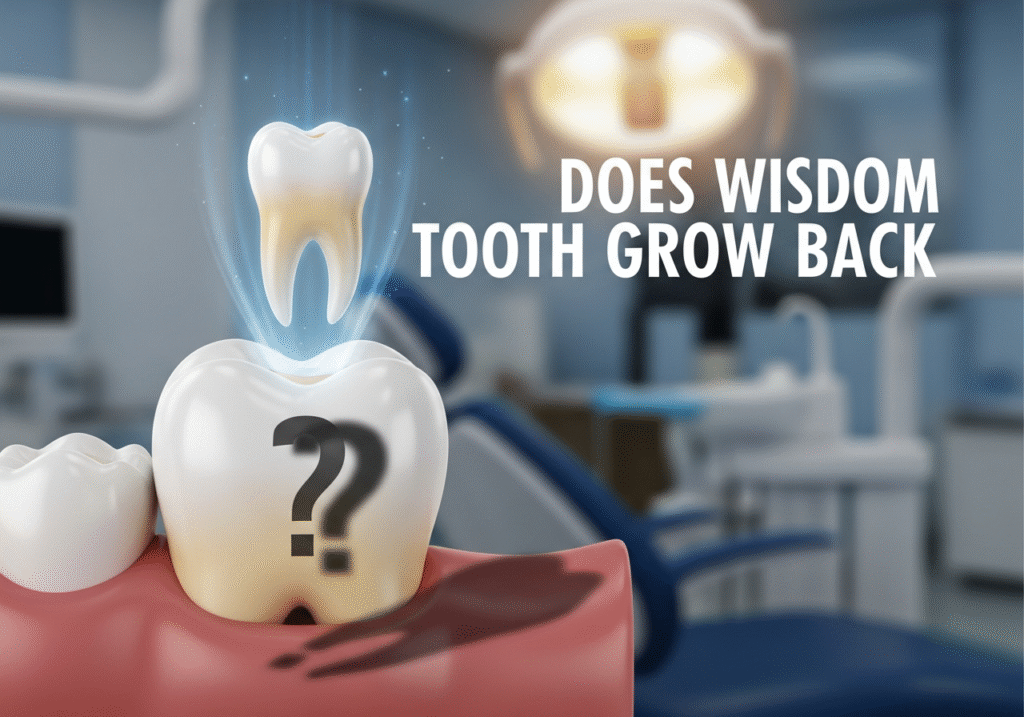
Many patients ask, Does Wisdom Tooth Grow Back after extraction or removal. Wisdom teeth, also known as third molars, usually emerge during late teens or early twenties, but once removed, they typically do not regrow. Understanding tooth development, oral surgery, dental anatomy, gum tissue, and bone regeneration can help clarify why regrowth is rare. Occasionally, remnants of the tooth or incomplete removal may cause partial growth or irritation, but full regrowth is extremely uncommon. Knowing the answer to Does Wisdom Tooth Grow Back helps patients plan for proper post-extraction care and maintain oral health. Proper healing, regular dental checkups, and monitoring for any unusual symptoms ensure that complications are minimized and that the mouth remains healthy after wisdom tooth removal.

Many people wonder, Does Wisdom Tooth Grow Back, especially when they feel pain or pressure in the same place after removal. A wisdom tooth normally does not return once it is fully taken out, but some rare situations can make it feel like it is growing again. This can happen because of supernumerary teeth, extra molars, tooth buds, third molar development, or dental tissues that change during healing. These conditions can create sensations that confuse people, making them believe another tooth is coming in. Understanding why these feelings happen helps you know what is normal and when you should visit a dentist for a checkup.
Many people feel pain or pressure in the back of their mouth even after their wisdom tooth has been removed, and this often leads to one big question: Does wisdom tooth grow back? It can be confusing because some people feel movement in their gums, while others believe a new tooth is coming in years after extraction. The truth is that once a full wisdom tooth is removed completely, it does not grow back. However, certain dental conditions can make it feel like the tooth is returning. This article explains every possible reason for this feeling, explores rare cases of extra teeth, and helps you understand what is normal, what is unusual, and when you should visit a dentist.
Does a Wisdom Tooth Grow Back After Removal?
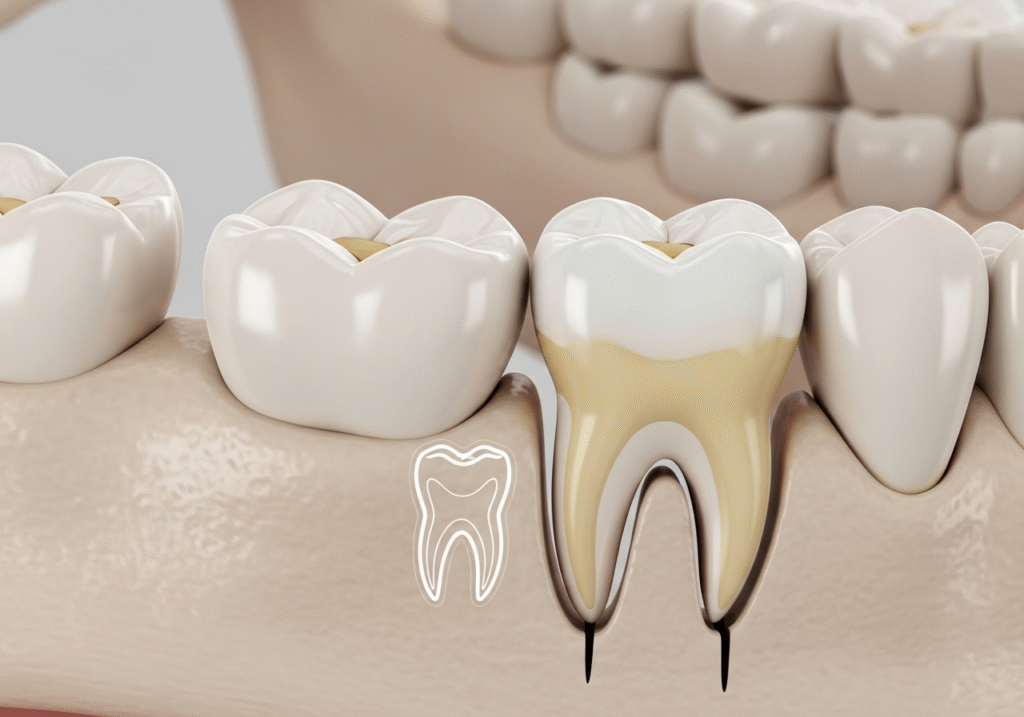
A fully extracted wisdom tooth does not grow back. Once the tooth and its roots are removed from the jawbone, the body does not produce a new one. Humans only develop two natural sets of teeth in life: baby teeth and adult teeth. Wisdom teeth, also called third molars, are part of the adult set.
However, confusion happens because some people experience pressure, swelling, or gum growth in the empty socket. Others may have leftover roots, tooth fragments, or even a rare extra tooth beneath the gums, which can make it feel like a tooth is growing again. This is why dental X-rays are often needed to confirm the true cause.
How Wisdom Teeth Normally Develop
Wisdom teeth develop much later than other adult teeth. They begin forming between the ages of 7 and 10, but they usually erupt between ages 17 and 25. Not everyone grows all four wisdom teeth; some people grow three, two, one, or none at all.
The development process includes the formation of tooth buds deep inside the jaw. These tooth buds slowly grow into full teeth over many years. Because the jawbone changes as people age, the angle and position of wisdom teeth can become problematic, leading to impaction or partial eruption.
Why Wisdom Teeth Are Often Removed
Wisdom teeth are commonly removed because they do not have enough space to grow naturally. Many people have smaller jaws today due to evolutionary changes, so the third molars push against other teeth or grow sideways. This causes pain, swelling, infections, or misalignment of nearby teeth.
When dentists remove wisdom teeth, they try to remove the entire tooth, including the roots. If this is done correctly, the tooth should not come back.
Can a Wisdom Tooth Really Grow Back?
A true regrowth is extremely rare. A wisdom tooth cannot regenerate once removed. But there are three main reasons people believe a wisdom tooth is growing back:
- A supernumerary tooth
- Leftover tooth fragments or roots
- New gum or bone growth that feels like a tooth
These conditions create sensations of pressure or sharpness, which can mimic tooth eruption.
Supernumerary Teeth: The Most Common Cause of “Regrowth”
A supernumerary tooth is an extra tooth that some people develop due to genetics. This condition is also called hyperdontia. These extra teeth can grow anywhere in the mouth, including the area behind molars. If a person has a supernumerary tooth behind the wisdom tooth, it may start developing after their wisdom tooth is removed.
How Common Is This?
Not very common. About 1–4% of the population may have extra teeth, but only a small percentage have them in the wisdom tooth area.
Why It Feels Like a Wisdom Tooth Growing Back
Because the extra tooth grows in almost the same position, people believe their wisdom tooth returned. Only an X-ray can confirm whether it is an extra tooth or a fragment.
Leftover Tooth Roots or Fragments After Extraction
Sometimes during a difficult extraction, the roots break into small pieces. Surgeons usually remove all fragments, but tiny pieces may stay behind if they are too deep or too risky to remove.
Can These Roots Grow Into a New Tooth?
No, they cannot grow into a full tooth. But they can move slightly or surface through the gums, causing discomfort and giving the illusion of a new tooth appearing.
What It Feels Like
A sharp bump
A hard surface under the gums
Pain when chewing
A sensation of growth
This is one of the most common reasons people think their wisdom tooth is returning.
Gum Growth or Bone Growth After Extraction
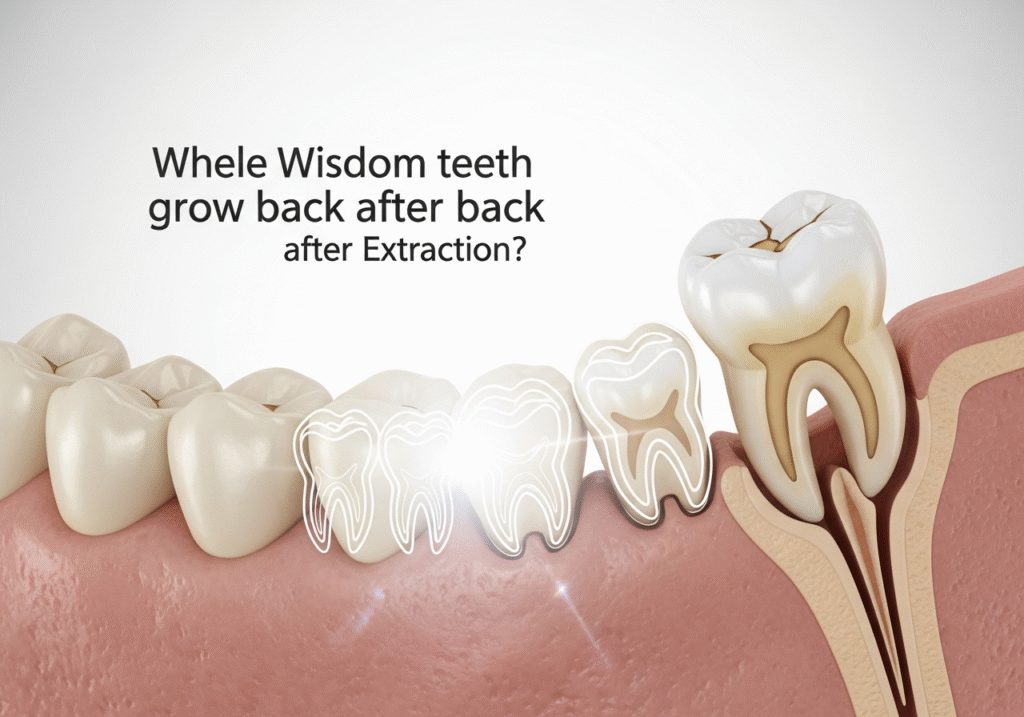
After a wisdom tooth is removed, the body starts healing by growing new bone in the empty socket. Sometimes this bone growth feels sharp or uneven and can mimic the feeling of a tooth.
Similarly, gum tissue can grow over the area and create lumps or pressure.
Why People Mistake It for Tooth Regrowth
Bone growth is firm
Gum growth feels like swelling
Healing pain can resemble eruption
Nerves can send signals like tooth movement
Symptoms That Feel Like Wisdom Tooth Regrowth
Many symptoms imitate the feeling of a growing tooth:
A dull ache in the jaw
Pressure behind the molars
Swelling in the gums
Soreness when opening the mouth
Sharp bumps on the gums
Pain while chewing
These sensations can come from infections, cysts, gum irritation, or bone healing.
Table: Differences Between Real Tooth Growth and False Regrowth
Condition Can Tooth Come Back? Why It Feels Like Regrowth How Common?
Full wisdom tooth extraction No Healing pain, nerve signals Very common
Extra (supernumerary) tooth Yes Extra tooth grows in same area Rare
Leftover root fragments No Roots rising to surface Common
Gum overgrowth No Tissue swelling feels like eruption Common
Bone spurs No Sharp bone edges poke through Moderate
Nerve Sensations After Extraction
The nerves around the jaw take time to recover after a tooth is removed. During healing, they may send signals that feel like:
Tingling
Burning
Pressure
Movement
These sensations often confuse people into thinking something is growing, but it is simply the nerves adjusting.
Case Study: Feeling a Tooth Grow Years Later
Case 1: The Extra Molar
A 27-year-old woman felt pain behind her molars seven years after extraction. X-rays revealed a supernumerary tooth forming in the same area. The tooth was not a regrown wisdom tooth but a naturally occurring extra tooth.
Case 2: Exposed Bone Spur
A man felt sharp pain where his wisdom tooth was removed. He believed his tooth was returning. X-rays showed a bone spur—part of the healing process, not a tooth.
Case 3: Root Fragment Rising
A woman experienced hardness under her gums. The dentist found a tiny root piece left behind that surfaced due to gum movement. It was removed and the pain stopped.
X-Ray Confirmation: The Only Way to Know
Pain or pressure alone cannot confirm tooth regrowth. A dental X-ray is the only accurate method. The X-ray can show:
Extra tooth buds
Leftover roots
Bone spurs
Cysts
Infections
Gum inflammation
Dentists rely on this to differentiate real growth from other conditions.
Why the Myth of Tooth Regrowth Exists
Many people hear stories about teeth returning, but misunderstandings come from:
Extra molars that look like wisdom teeth
Tooth fragments that push upward
Cysts that mimic tooth growth
Gum swelling mistaken as a tooth
Delayed healing that feels like eruption
These myths continue because the sensations are very similar to tooth eruption.
What to Do If You Feel a Tooth Growing Back
If you feel pressure, swelling, or pain in the extraction area, here are the best steps:
Rinse mouth with warm salt water
Maintain soft brushing around the area
Avoid poking gums with fingers or tongue
Monitor for swelling, fever, or pus
Schedule a dental checkup if pain lasts more than three days
Pain that gets worse often signals infection, not tooth regrowth.
When to See a Dentist
You should see a dentist if you have:
Strong pain in the extraction area
Swelling or redness
Bad smell or taste
Pus or bleeding
Difficulty opening your mouth
Sharp bone-like edges poking through gums
These signs suggest complications needing professional care.
FAQ Section
- Can wisdom teeth come back after years?
No. They cannot regrow. But extra teeth or fragments can appear later. - Why does it feel like my wisdom tooth is growing again?
Probably gum growth, bone growth, leftover roots, or infection. - Can leftover roots develop into a full tooth?
No. They cannot form a new tooth. - What if a tooth is growing under my gums?
It is likely a supernumerary tooth, not a regrown wisdom tooth. - Should I worry if I feel pain years after removal?
See a dentist. It may be an infection or bone spur.
Conclusion
Wisdom teeth do not grow back after complete extraction. Once the entire tooth and root system are removed, your body cannot produce a new tooth. However, many conditions—such as leftover fragments, gum growth, bone spurs, infections, and rare extra teeth—can create the feeling of regrowth. Understanding these causes helps you respond correctly and avoid unnecessary worry.
If you ever feel movement, pressure, or pain in the area years after extraction, a dental checkup and X-ray can confirm the real cause. Most sensations are normal and part of the healing process, but some may require treatment. Knowing this helps you protect your oral health and understand your body better.
Can I drink coffee 24 hours after tooth extraction?
It’s best to avoid coffee for the first 24 hours because heat can dissolve the blood clot.
Drinking it too soon may increase bleeding and delay healing.
Wait until swelling and bleeding reduce before drinking warm beverages.
Can I drink room temperature coffee after tooth extraction?
Room-temperature coffee is safer than hot coffee, but it’s still best to wait at least 24 hours.
Consuming it too early can disturb the clot and increase dry socket risk.
Once bleeding has stopped, small sips are usually fine.
Can I have iced coffee after tooth extraction?
You can have iced coffee after 24 hours as long as you avoid using a straw.
Suction can dislodge the clot and cause dry socket.
Sip gently from a cup and avoid very cold temperatures if they cause sensitivity.
Can I drink coffee 3 days after tooth extraction?
Yes, most people can safely drink coffee by day 3 if healing is normal.
Choose warm—not hot—coffee to avoid irritating the extraction site.
If you still feel pain or notice bleeding, wait another day.
Why can’t I drink coffee after tooth extraction?
Hot coffee can dissolve or dislodge the clot needed for healing.
Caffeine may also increase blood flow, causing more bleeding.
Avoiding coffee early on helps prevent dry socket and complications.
When to drink coffee after tooth extraction?
Most dentists recommend waiting 24–48 hours before drinking coffee.
Start with warm or room-temperature coffee, not hot.
If healing feels sensitive, delay another day.
Can I drink decaf coffee after tooth extraction?
Decaf is slightly safer because it doesn’t boost blood flow as much as caffeine.
Still, avoid drinking it hot during the first 24 hours.
Choose lukewarm or room-temperature if you need it early.
Can I drink coffee after wisdom tooth extraction?
Yes, but only after the first 24–48 hours, and start with warm—not hot—coffee.
Wisdom tooth sites take longer to heal, so be extra cautious.
Avoid straws completely to prevent dry socket.