Many people wonder, Can Wisdom Tooth Regrow after extraction. Typically, once a wisdom tooth is removed, it does not regrow. However, incomplete removal or retained tooth fragments may sometimes cause minor issues. Understanding oral surgery, tooth development, gum tissue, bone structure, and dental anatomy helps patients know what to expect, ensures proper healing, and reduces the risk of complications after wisdom tooth removal.
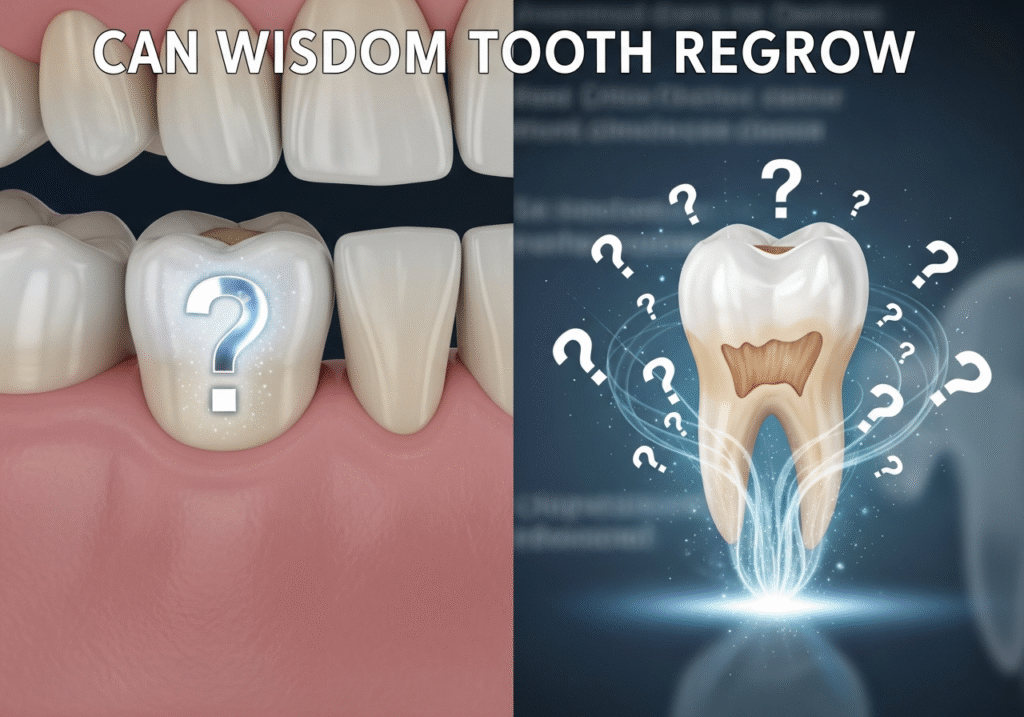
Many people wonder, Can wisdom tooth regrow? This question often comes after a tooth removal or when someone feels pain again in the same area. In most cases, wisdom teeth do not grow back once they are removed, but some rare situations can make it feel like they are returning. This happens when small hidden tooth parts or extra teeth push through the gums later in life. Many factors such as genetics, extra molars, supernumerary teeth, tooth buds, dental tissues, and third molar development play a role in how your mouth changes over time. Understanding these factors helps you know what is normal and what needs dental care.
Many people feel strange sensations in their gums after a wisdom tooth removal. Some feel pressure, some feel small hard bumps, and some even feel pain months later. Because of these sensations, many people ask the same question: “Can a wisdom tooth regrow?” This is a very common doubt, and the confusion grows stronger when someone feels that something sharp or hard is coming from the same area where the tooth was removed. Some people even believe the tooth is coming back because the gum gets swollen or the bone becomes hard during the healing period.
In reality, the body does many things during healing. Bone grows. Gums close. Nerves wake up. All of these feelings can seem very similar to a tooth erupting again. That is why many patients believe that their wisdom tooth is returning, especially if the extraction was painful or if they did not fully understand the healing process. However, understanding what truly happens under the gums after extraction helps remove the fear and confusion.
This article explains everything in simple, clear English. You will learn how wisdom teeth grow, whether they can regrow, why some people feel like they are growing back, and what to do if you experience pressure or discomfort after removal. We will explore real scientific reasons, dentist-backed explanations, rare conditions, healing stages, case studies, FAQs, and important facts every patient should know.
By the end, you will have complete, deep understanding about wisdom tooth regrowth myths, real causes of gum pressure, and the truth behind all sensations you feel after extraction.
What Are Wisdom Teeth?
Wisdom teeth, also called third molars, are the last molars in your mouth. They usually appear between the ages of 17 and 25. Some people get all four wisdom teeth, some get only one or two, and some do not get any wisdom teeth at all. These teeth are located at the very back of the mouth, in the upper and lower jaws.
Wisdom teeth were useful thousands of years ago when humans ate hard foods like roots and raw meat. At that time, our jaws were larger and stronger, so there was enough space for extra teeth. But as human diets changed and cooking made food softer, our jaw size reduced. Because of this smaller jaw size, many people do not have enough room for wisdom teeth to grow naturally.
If wisdom teeth do not have space, they push against other teeth or try to come out at the wrong angle. This causes pain, swelling, infection, and sometimes damage to nearby teeth. That is why many dentists recommend removing wisdom teeth before they cause big problems.
When Wisdom Teeth Normally Appear
Wisdom teeth usually erupt during late teenage years or early adulthood. But their timeline is not the same for everyone. Some people get them early at age 15, while others get them at 30. A few people even experience wisdom teeth erupting after the age of 40, although this is very rare.
When wisdom teeth try to erupt, you may feel pressure in the jaw, swelling in the gums, or difficulty opening your mouth. Sometimes the tooth stays under the gum and never appears. These teeth are called impacted wisdom teeth.
Why Wisdom Teeth Cause Problems
Wisdom teeth cause issues mainly because the jaw does not have enough space for them. When they try to grow, they may press against nearby teeth or the jawbone. They may also get trapped inside the gums or grow sideways. When bacteria get trapped around a partially erupted tooth, it can lead to infection.
These painful issues are common reasons why dentists remove wisdom teeth.
Can Wisdom Tooth Really Regrow?
The short and simple answer is: No, a wisdom tooth cannot regrow once it is completely removed.
Humans do not have a natural ability to grow new teeth after the first and second sets of teeth (baby teeth and adult teeth). Once an adult tooth is taken out completely, the body cannot form another tooth in the same place. This is true for wisdom teeth as well. A fully removed wisdom tooth cannot grow back.
So why do people think their wisdom tooth is coming back? The reason is that the healing process often creates sensations that feel very similar to tooth eruption.
Scientific Reason Why Wisdom Teeth Cannot Regrow
Adult humans have only 32 permanent teeth, and these are all formed during early childhood inside the jaw. After permanent teeth develop, the human body stops creating new tooth buds. Since no new tooth bud exists, the body has no way to regrow a wisdom tooth.
Dentists can confirm this through an X-ray. If the wisdom tooth was fully removed, no new tooth structure remains.
Why People Think a Tooth Is Regrowing

Even though wisdom teeth cannot regrow, many patients feel something sharp or hard weeks or months after extraction. There are several scientific reasons for this feeling:
- Bone Regrowth
After extraction, the jawbone begins healing by forming new bone. This growing bone may feel hard or sharp.
- Gum Re-shaping
When the gums heal, they tighten and create pressure similar to tooth eruption.
- Nerve Healing
As nerves wake up, the sensation sometimes feels like a tooth pushing upward.
- Leftover Root Fragments
In rare cases, a tiny piece of the tooth root may remain and rise toward the surface.
These natural healing steps are often mistaken for tooth regrowth.
Why Some People Feel Wisdom Tooth Is Growing Again
Many people feel pressure or hardness in the same area where their wisdom tooth was removed. This is normal and part of the healing process. When the jawbone grows back, it fills the empty tooth socket. This new bone may feel like a lump or a small bump. It can take several months for the bone to become smooth again.
The gum tissue also heals by closing the extraction site. During this process, the gum may feel swollen or sensitive. As the tissue strengthens, it can feel like something is pushing through.
Another reason for this sensation is nerve regeneration. After extraction, nerves in the jaw begin to repair themselves. This can create tingling, pressure, or tooth-like sensations.
None of these mean that a wisdom tooth is regrowing. They are normal healing steps.
Bone Regeneration After Extraction
After the wisdom tooth is removed, the body starts rebuilding the bone in that area. This process is called bone remodeling. The growing bone sometimes feels stiff, hard, or sharp under the gum. Many patients mistake this for a tooth erupting, but it is simply bone healing.
Gum Healing Sensation
Gum healing can also create a feeling that something is moving or erupting. As the gum tissue becomes stronger, it may feel raised or thick. This is not a tooth but normal gum recovery.
Rare Cases That Look Like Wisdom Tooth Regrowth
Even though a wisdom tooth cannot regrow, there are rare situations that can make it seem like it is returning.
- Residual Tooth Roots
If a tiny part of the root is left behind during extraction, it may slowly move upward. This can feel like a tooth coming back. Dentists remove these root fragments if they cause pain or discomfort.
- Supernumerary Teeth (Extra Teeth)
Some people have extra molars called supernumerary teeth. These are extremely rare. These extra teeth can appear near the wisdom tooth area, making people think the wisdom tooth grew back.
A dental X-ray can confirm this condition.
Wisdom Tooth Growing Under the Gum
Sometimes a wisdom tooth does not fully erupt when you are young. It may stay deep inside the jaw and push upward many years later. If you had only one wisdom tooth removed, another one below it could be growing up slowly. This is not regrowth; it is delayed eruption.
What To Do If You Feel Something Is Growing Back
If you feel pressure, pain, or a hard bump, you should visit your dentist. Many problems look like regrowth but are often gum swelling, bone growth, or leftover roots. Only an X-ray can show the true cause.
Treatment Options
If the sensation is normal healing, no treatment is needed. If a root fragment or extra tooth is found, the dentist may remove it. Healing afterward is usually quick.
Healing After Wisdom Tooth Removal

Healing after extraction happens in several stages.
A normal healing timeline looks like this:
Day 1 to 3: Blood clot forms, swelling begins
Day 4 to 7: Gum tissue starts closing
Week 2: Gum becomes firmer
Month 1: Bone starts forming
Month 3 to 6: Bone fully fills the socket
These changes can feel like something is growing inside the gum, but it is only healing tissue.
Myths and Facts About Wisdom Tooth Regrowth
Myth: Wisdom teeth grow back.
Fact: They cannot regrow once removed.
Myth: Hard bumps mean tooth is returning.
Fact: It is new bone or scar tissue.
Myth: Pressure in the jaw means regrowth.
Fact: It is nerve healing or gum tightening.
Table: Sensations After Extraction and Their Meaning
Sensation What It Means
Hard bump Bone growth
Gum swelling Healing tissue
Pressure Normal nerve recovery
Sharp point Bone edge healing
Pain Inflammation or leftover root
Case Studies
Case Study 1:
A 28-year-old patient felt a hard lump in the extraction area three months after removal. She believed the tooth was coming back. An X-ray showed new bone forming. This bone bump smoothed out in six months.
Case Study 2:
A 35-year-old man thought his wisdom tooth was regrowing because he felt a sharp point. It turned out to be a leftover root fragment. The dentist removed it, and the sensation stopped.
Case Study 3:
A 22-year-old woman believed her tooth was returning. X-rays showed an extra tooth. This rare condition required minor surgery.
FAQs
Can a wisdom tooth grow twice?
No. It cannot regrow. But delayed eruption or root fragments may cause confusion.
Why do I feel pressure after removal?
This is normal jawbone healing.
Is a hard bump after extraction normal?
Yes, it is bone healing.
Can gum tissue feel like a tooth?
Yes, healing gums can create similar sensations.
Conclusion
Wisdom teeth cannot regrow once fully removed. But many normal healing sensations feel like regrowth. Bone growth, gum healing, nerve repair, or leftover roots can make people believe the tooth is returning. Understanding these changes helps reduce fear and confusion. If you ever feel unusual pressure or pain, a simple dental X-ray will show the exact reason. Most of the time, it is normal healing, not regrowth.