Whitening strips are one of the most popular at-home methods for achieving a brighter, whiter smile. They’re convenient, affordable, and deliver visible results within days. But one common question people ask is: Should I brush my teeth after using whitening strips?
This is an important question because timing your brushing session matters — doing it incorrectly may cause tooth sensitivity or enamel damage. Let’s look at what dental professionals recommend to help you protect your teeth and maximize whitening results.
What Are Whitening Strips?
Whitening strips are thin, flexible plastic pieces coated with a peroxide-based gel. The peroxide works by gently breaking down stains on your teeth, lifting yellowness and discoloration over time.
They’re an easy alternative to professional whitening treatments, but using them correctly — especially in combination with brushing — is key to keeping your enamel healthy.
Should You Brush Your Teeth Before Using Whitening Strips?
It’s a good idea to brush your teeth before applying whitening strips. Doing so removes plaque and surface debris, allowing the whitening gel to reach the enamel more effectively.
However, if you’ve just consumed acidic foods or drinks like coffee, wine, or citrus, wait about 30 minutes before brushing. Acid temporarily softens your enamel, and brushing immediately afterward could cause microscopic damage.
Should You Brush Your Teeth After Using Whitening Strips?
The short answer is no, you shouldn’t brush your teeth immediately after using whitening strips. Here’s why:
- Sensitivity Concerns: Whitening agents can make your teeth temporarily more sensitive. Brushing too soon can irritate enamel and cause discomfort. Experts recommend waiting at least 30 minutes before brushing.
- Enamel Recovery: The peroxide in whitening strips opens the pores of your enamel to lift stains. Brushing right away may scrub the enamel before it has fully re-hardened.
- Residue and Stains: Brushing too soon may push whitening gel residue deeper into enamel pores, potentially leading to uneven coloration or irritation.
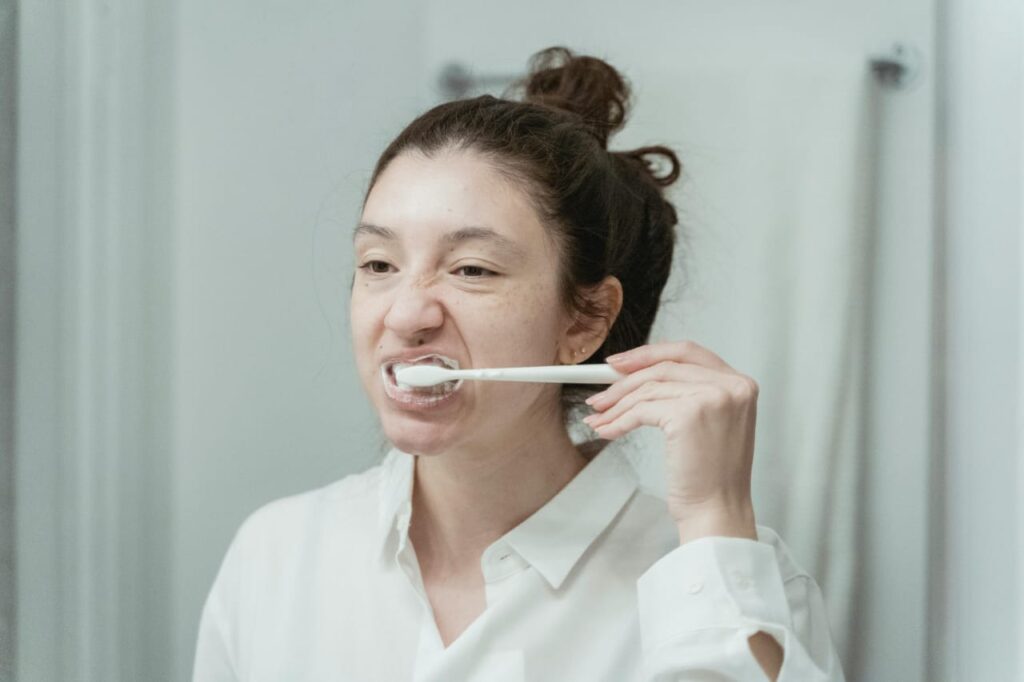
What Should You Do After Using Whitening Strips?
Instead of brushing right away, follow these steps for optimal enamel protection and comfort:
- Rinse Your Mouth: After removing the strips, gently rinse with water to clear away excess gel.
- Wait Before Brushing: Give your teeth at least 30 minutes of rest before brushing.
- Use a Soft Toothbrush: When you do brush, choose soft bristles to avoid abrasion.
- Use Fluoride Toothpaste: Fluoride strengthens enamel and helps reduce post-whitening sensitivity. Skip abrasive whitening pastes.
Stay Hydrated: Drink water after whitening to help flush out any remaining gel and maintain saliva flow, which naturally protects your teeth.
How Often Should You Use Whitening Strips?
Whitening strips are potent, so overusing them can lead to enamel thinning or lingering sensitivity.
Most brands recommend using strips once daily for up to 10 to 14 days, followed by a break to let your enamel recover. Always follow the manufacturer’s instructions for best results.
Tips for Maintaining a Bright Smile
To keep your smile white and healthy after using whitening strips:
- Brush and Floss Regularly: Stick to brushing twice a day and flossing once to prevent new stains.
- Limit Stain-Causing Foods and Drinks: Reduce coffee, tea, wine, and soda. If you indulge, rinse afterward.
- Use a Whitening Toothpaste Weekly: A fluoride-based whitening toothpaste helps preserve brightness while strengthening enamel.
Schedule Regular Cleanings: Professional cleanings remove buildup and keep your whitening results long-lasting.
Conclusion
So, should you brush your teeth after using whitening strips? Not immediately. Rinse your mouth to remove residue, then wait about 30 minutes before brushing. This simple step helps protect your enamel and ensures the whitening agent continues working effectively. With proper care and patience, you can enjoy a radiant, confident smile for years to come.